

Hybrid Training Is Not Generalist Training
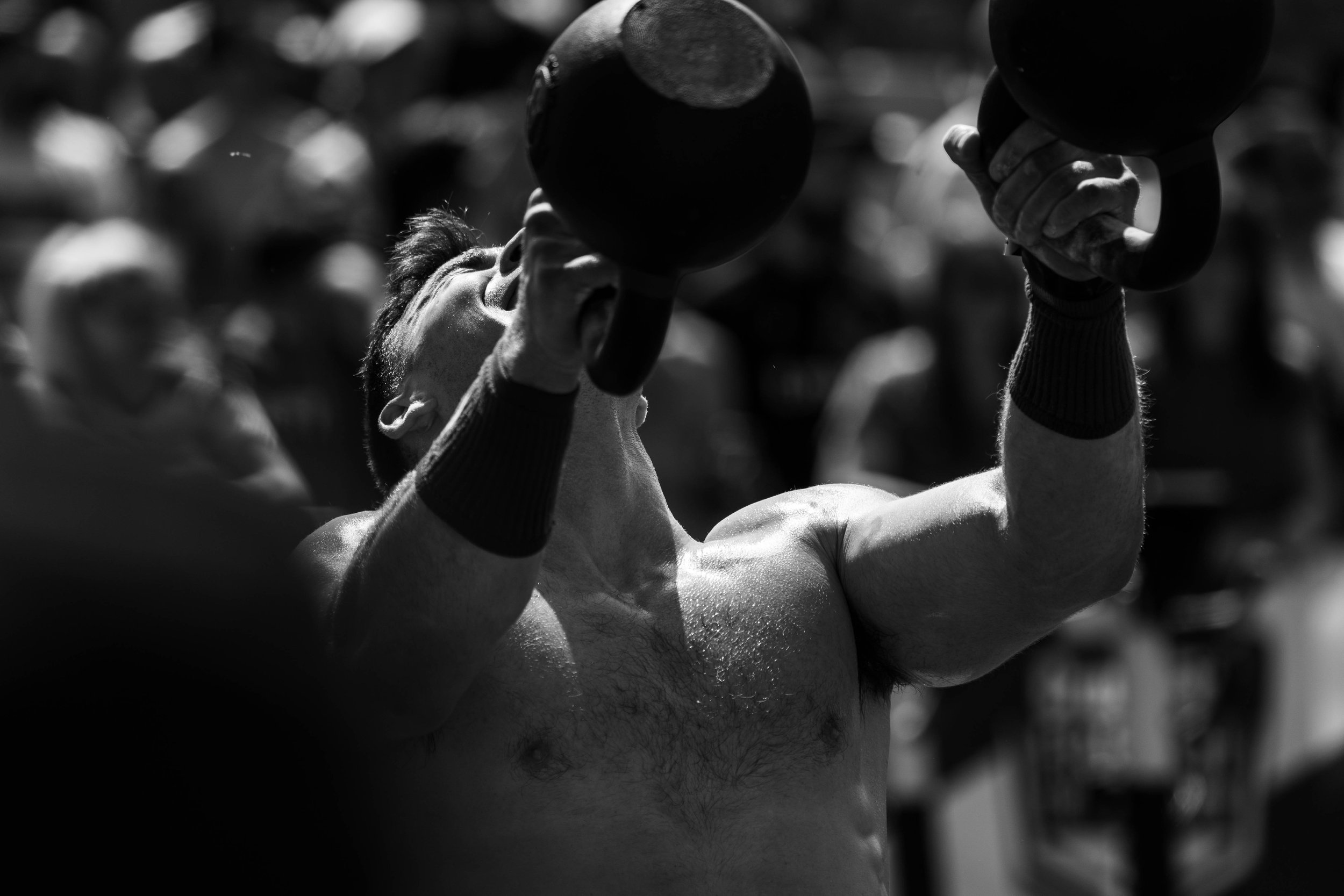
Hybrid training is specialization pointed in two directions at once, not general physical preparation.
Many people are under the impression that if you can lift heavy and run far or fast, you're good at everything in between. That's like saying someone who learns Japanese and Portuguese knows Finnish. General competency is not mastery of two specialties. Owning both ends of a spectrum is not the same as having expansive transferable range, because the extremes are their own skills with their own demands.
Specialization most often uses formulas. General physical preparedness is developed using principles. Sport is fluency in one language. GPP is keeping the ear and the mouth capable of any of them.
I'm not denigrating hybrid training goals, or saying you should avoid them. I'm saying it gets sold as something it is not. People assume two above-average expressions represent capability. What gets missed is that above average comes with an equal and opposite deficiency.
Not just because you ran out of hours. Because tissue doesn't hold neutral when you stop asking anything of it, and demanding performance can come by way of eliminating it in something else. As an example; when runners lose range in the ankle to make a more efficient spring, the cost is in control of the hip or spine that can no longer load in full flexion.
Connective tissue, muscle, and the aerobic machinery all adapt to the demand actually placed on them, and that adaptation runs in both directions. The competitive cyclist's structures organize around a narrow, repeated, low-amplitude, low-force demand — and they get very good at it while quietly losing tolerance for everything outside that window. Positions stop being available. Supportive musculature that never gets recruited stops being maintained. A competitive fighter runs the same process in reverse through the aerobic efficiency side. Both athletes are adapting the entire time. They're adapting down in every quality nobody is measuring, at roughly the rate they're adapting up in the two that are.
That's the part that makes it equal and opposite rather than a simple opportunity cost, which most athletes are well aware of. You aren't just failing to gain. You're actively training the loss.
A huge deadlift in close proximity to a fast mile is impressive, but it's still using sport to measure fitness. The results are real. The assumption that they're general is what makes it hard to see what GPP is actually for.
Those numbers are performances — proxies standing in for the trait you actually care about. And a proxy only holds where it was measured. Transfer of training is not 1:1, and it dilutes the further you move from the specific task that produced it (Issurin, 2013). The more specialized the input, the less of it generalizes out. Train two specializations concurrently and they don't stack, they interfere — each one blunting the adaptation the other is chasing (Hickson, 1980).
So the metrics get used as credentials. But a credential is a correlation, not the capacity itself.
Most people look at me sideways when I tell them performance-based training is not what they want. So let's cover what I mean.
Performance is above-average capability in a narrow task. The average here isn't the overall human average, which is pathetic. It's the average of your nearest cohort. Say you compete at an intermediate level in MMA, or you're a CAT 3 cyclist — I'm avoiding professional levels on purpose because incentive is different, and the sacrifice is well-known in most cases. Measure any exercise across that population and take the average. The less related the sport is to the ability, the lower that average sits.
Fighters tend to land somewhere around 1.2–1.6x bodyweight on a deadlift or back squat. Turns out that moving something near your own weight is related to success in the ring. Cyclists come in closer to 0.95–1.2x. Flip it and the cyclists report aerobic thresholds in the range of 225–275w FTP against fighters at 175–200w or lower.
Here's the useful part, and it's the opposite of what most people take from a number. Those measurements are excellent at telling you what someone gave up. They're close to useless at telling you what someone has.
Read them that way and they're diagnostic. The fighter's FTP isn't a weakness he happens to have. It's the receipt for his specific strength. The cyclist's deadlift is the cost for his FTP. Neither athlete chose to be deficient. They chose a priority, and the priority did the deprioritizing for them. What you measure goes up. What you stopped watching goes down, and it goes down because you stopped watching it.
We only have so many resources. You can temporarily expand them through fueling and recoverability, which is exactly what the sport model is built to do, but everyone gets the same hours in a day and that's the equalizer. This is why the World's Strongest Man is not a multi-time Tour de France winner. Set aside power-to-weight entirely. There isn't enough time, and there isn't enough tissue to point in both directions at once.
Hybrid training is averaging the extremes. They make it look possible to be maximally fit. And yes, there are people who can almost freakishly sustain jaw dropping numbers in 2 realms, but it is still just a highlight reel of specificity. It is not general adaptation. Hybrid training is extremely impressive. So are the pogostick backflip world championships. Both highlight what humans are capable of when we focus. Neither of them teach us how to generally adapt.
Strength was never one thing.
The deeper mistake is assuming a measurement of an ability describes the biology underneath it. We say someone who runs fast and lifts big is enduring and strong, then change the movement and suddenly they aren't.
You can see this without leaving a single sport. In powerlifting it's unheard of for the best squatter to also be the best bencher and the best deadlifter. In cycling, the best climber is rarely the best time trialist and almost never the best sprinter. And that isn't a scheduling problem. These athletes have the same training year, the same equipment, the same coaching, often the same room. The trait fragments anyway.
Which tells you the trait was never singular to begin with. "Strength" isn't a quantity you own. It's a description of what a specific set of tissues does under a specific set of conditions, and change the conditions and you're describing something else. Two above-average expressions don't sum into general capability for the same reason the best squatter isn't the best deadlifter — there was never a general thing sitting underneath them to sum into.
So when hybrid training gets promoted as the best of both worlds, a route to becoming a generalist, it contradicts what sport science already established. Adaptation is specific. That's the SAID principle. And specificity arrives with its deficits attached.
We can see it right now as the 20th year of the CrossFit Games is just coming to a close. By all metrics of sport, they match a "hybrid" description pretty well. Deadlifts pulled into the 600s, the work capacity in the 10-20 minute range is mind boggling, and they are tested on repeated efforts over the course of almost a week, which some infer as a test of endurance. It gets sold as "preparing for the unknowable", but all of these movements have been measured, rehearsed, and practiced as well as the time domains. It's why we call it a sport. And the deficiencies are present just like any push to performance in sport. Like when a Games champion, considerably one of the "strongest" and most resilient on the planet takes a beginner jiujitsu lesson and shreds his knee because his force production was only ever meant for one direction, and not built to resist rotational pressure. I want to hedge here because I'm not disrespecting this athlete, only pointing out how specificity causes deficiency.
GPP is a distribution, not a trait
If adaptation is specific — and it is — then general physical preparedness sounds like a contradiction. You can't specifically adapt to everything.
You don't. GPP is not a general adaptation. There's no tissue that responds to "everything," no quality sitting underneath that gets bigger when you train broadly. GPP is a distribution of specific adaptations, kept wide on purpose.
Specialization buys depth with width. It takes the same physiology and drives two or three qualities as far as time and tissue allow, and the rest of the distribution collapses to fund it. GPP inverts the trade. Shallower peaks. Nothing left unattended. The generality isn't a trait you built. It's what's left when you refuse to let one demand monopolize the system.
Which is also why it resists testing. A number is a single point. Width isn't a point, it's a shape — and any test you could run collapses the shape back to a point, which is the exact error the hybrid athlete makes with his deadlift.
Training to improve an exercise is not the same thing as using an exercise to improve the physiology. The former is what most of the population is doing. The latter is general physical preparedness, and it's the one that transfers into the parts of your life that matter.
GPP does not seek performance, because performance seeks specific improvement. It acts as a balancing phase, or an initiation. It is constantly varied but it is not random. It aims at the lowest-hanging fruit — the most obvious deficiency, which is often the most neglected. It isn't about getting good at exercise. It's after the general traits of a system that works: efficiency and output.
Two things survive the collapse, because they aren't exercises. Output — how much force or work the system produces on demand. Efficiency — how little it costs to produce it. Every specific demand draws on some combination of the two, which is why GPP targets them instead of lifts. They're the conditions tissue works under, not the patterns you rehearse.
Cross those against the two systems doing the work, muscular and aerobic, and you get four constraints. Muscular output. Muscular efficiency. Aerobic output. Aerobic efficiency. That's the whole distribution, and it's the working model I use, because a constraint tells you what a session is for without telling you what number to hit.
I built a widget around it at weareheavymeta.com/constraint. You pick a constraint and it sends you three sessions. No obligation, and you can cycle all four constraints for all twelve. It's the operational version of everything above, and I'm still improving it every week.
Finding the deficiency doesn't require a test. It requires exposure. Assessment and measurement got conflated somewhere, and they aren't the same act. Put the body in a position it hasn't occupied, or under a demand it hasn't had to answer in a year, and it reports back immediately. That report is qualitative and it is still information. The joint that won't get there. The position that needs a warmup to be available. The effort that costs you the rest of the day. You assessed. You just didn't score it.
For the hybrid athlete, the deficiency isn't hard to find. It's just never on the list that gets tested or shows up on a highlight reel.
The point of GPP is to minimize deficiency. Which is where the earlier framing runs out, because this was never about collecting good lifts or a well-rounded energy system relative to your peers. It's about understanding the system whole, and that mostly means refusing to conflate tissue behavior with its expression through movement. An above-average squat tells me nothing about the health of the hip or the back, or how those structures tolerate force or work capacity outside the expressed pattern. It tells me about the squat. And the bigger the squat, the more deficits I expect everywhere else.
General fitness was never about amplifying circus tricks. It's about fixing the weak link. It isn't measured, it's approximated — because it's defined by each person's specific limitations, and limitations don't share a unit. There's no system, no brand, no flow chart that applies cleanly to everyone. It's individual. Specific measurements can never equal general capacity.
How you know without a number?
This is the hardest part of general adaptability: it isn't measurable. It's the question that floods my inbox every time we say a 1RM or a VO2 max doesn't matter much. But how do I know if I'm improving?
My best attempt at easing that is to point out that uncertainty is the default. I've never met someone with phenomenal performance who mistook that metric for invincibility. At the highest end it does the opposite — it magnifies the uncertainty. Especially when standards get used as credentials and calling cards for identity. Fitness theatre.
If a metric were equivalent to a general physiological trait, we could use it to predict injury. We can't.
So when someone asks how they'll know they're improving without a lift or a timed sequence, I tell them it's a deep knowing. An internal understanding that your physiology is better than it was.
That answer frustrates people because they think it can't be checked. It can. It's the same instrument you used to find the deficiency in the first place. It's just quiet, and nobody taught you what to listen for, or the people teaching you want you to listen to them and not yourself.
Some clear indications that you're improving: positions, movements, or joint angles that used to require a warmup are available without. You don't hesitate or brace before standing up. A session that used to cost you two days doesn't anymore. An explosive movement happens without thought or planning. The gap between hard efforts closes without you managing it. You pick up something awkward and heavy at an odd angle and nothing in your back has an opinion about it. You sleep through the night after a hard day instead of lying there wired. And maybe the biggest signal that I ignored for years, you wake up excited to explore training, hoping that you recovered because you want to push your body.
None of those are measurable tests. You can't rank them and you can't post them. But every one of them is your physiology reporting on itself, and they're considerably more honest about the state of the system than a number you trained specifically to move.
People hate this answer, and that reaction might be the clearest evidence that our modern fitness criteria is a ruse. Knowing strikes most people as too subjective. They want concrete evidence. External validation. But fitness qualities are subjective — and you are the subject. Needing something outside yourself to tell you about yourself is why so much of this feels uncertain in the first place.
Or run it the other way. You've felt a tweak in a shoulder or a sensitivity in a knee from moving awkwardly. It made you hesitate. You dropped the load or skipped the session entirely. Was that decision based on a metric? On the measurable performance of the joint? No. It was a feeling, and you knew exactly what to do with it.
You already trust this system. You just only listen to it when something hurts.
General physical adaptation works the same way. You just know.
Training for sport and training for life share equipment and patterns. They don't share a model. One is built to produce a number on a given day. The other is built to keep you capable on all of them.
So train "hybrid" or don't, just don't mistake the scoreboard for the thing it stands in for.
