

The Peptide Fence
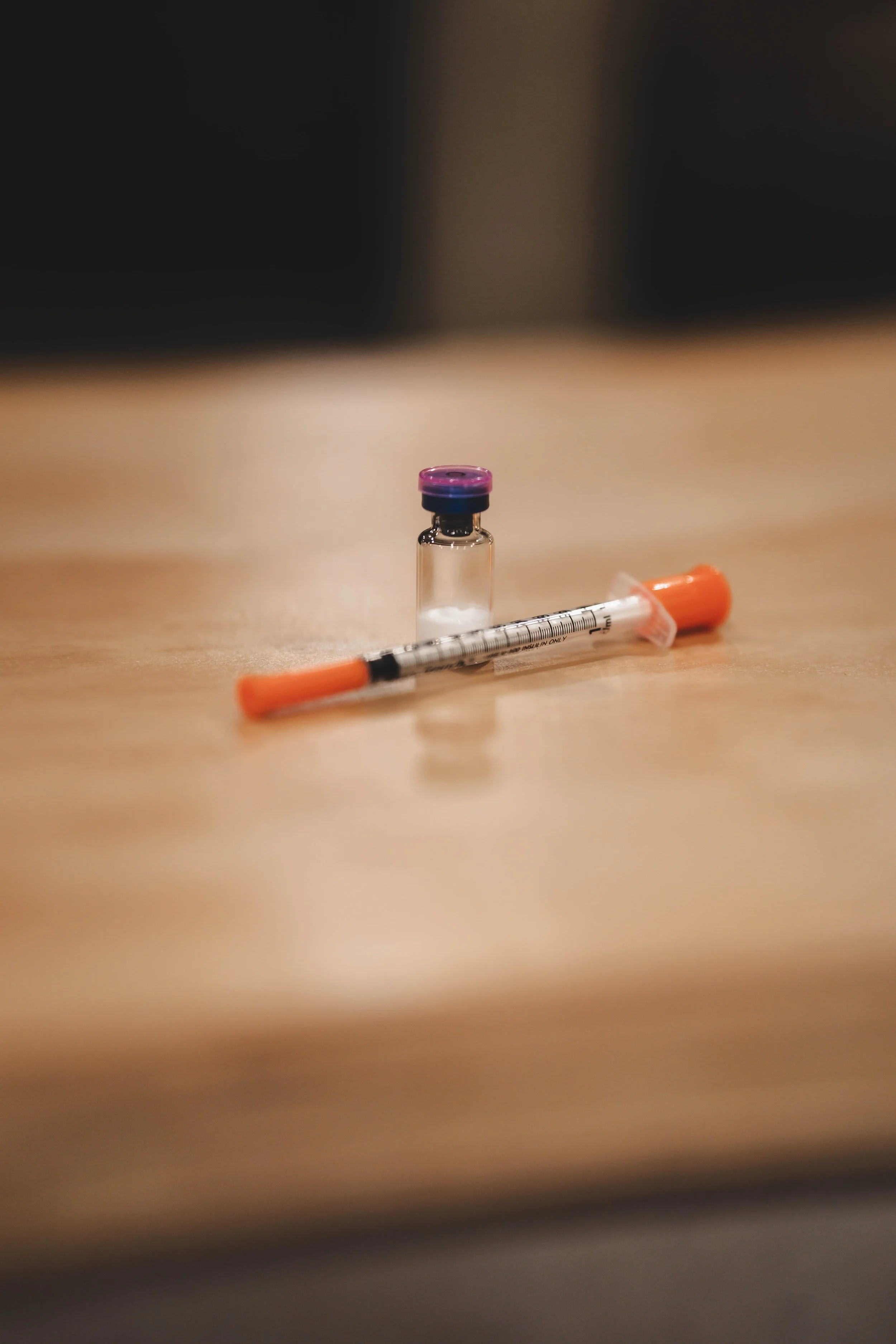
There are a lot of opinions about peptides floating around.
To some they are a panacea of health and wellness. They became the only answer to a question of how to heal or how to improve performance. Then you might hear with equal opposite fervor, how they are the devil in disguise. That being unapproved or not distributed through pharmaceutical giants means the stringent standards of medicine production are not applied.
Somewhere between these two extremes lies the truth. But the answer of whether peptide therapy is for you won't be found in a 90-second hot take from a major news network warning you about low occurrence, fear-worthy outliers, and it certainly won't come from your favorite sun-kissed influencer offering his opinion along with his discount code. Not even this article is meant to convince you. It is here to show you our process of deciding whether peptides are a relevant intervention.
All interventions carry risk. If something can work, it more than likely can work against you in an equal opposite way. Some interventions have high reward and others carry low risk. They are generally aligned, risk to reward. "Magic pills" would be no risk, extremely high reward — which is why they don't exist. What we want to make sure is that the risk profile matches the reward and the circumstances. The way we do that is by best understanding the problem.
Whether it's weight loss, recovering from injury, or managing an increase in performance, you need to understand what the limitation or the cause of the issue is. This is where testing, outside perspective, or consulting with specialists can help improve your odds. Funny enough, it is the part that people have the hardest time doing. People would often rather spend thousands on substances they are unsure will work than spend a few hundred dollars talking to someone who could tell them directly what to get or what not to get.
Almost all reputable experts start with foundational questions. They look for causes, and they probably seek to remove behavior before they try and change one. For instance, with injury, the first issue is to understand what caused or is causing it — in the form of chronic issues. You neutralize further damage before you seek to fix. With weight loss, an expert will first try to get a handle on what caused the weight gain. An increase of calories, sure, but also what was the trigger for that increase, where is the additional stress, or the reduction of eustress that allowed utilization of those calories. Perhaps the weight gain isn't weight at all. It's a redistribution, a loss of lean mass and an increase of adipose tissue, in which case they didn't gain weight, they look and feel soft and fluffy. Most people can't perform above average until they solve the problems that are keeping them below. But instead of acknowledging the deficit, they reach for the stimulant, the nootropic, or the supplement that promises a result, furthering their deficiency or just hiding it. They think they can layer over a problem without addressing the root of it. Sweeping your mess under the rug.
So identifying what problem you are trying to solve and what caused it can usually answer 75% of the question "what peptide should I get?"
Using injury as our example, no peptide can "heal" your injury for you. Damaged tissue and wounds need information to heal. That information comes in the form of stress through movement. Without a foundation of progressive stress to help heal the injury, there is no need to layer a peptide on top of it. Which is often what I see people wanting to do when they ask me about BPC-157 or its analogues.
The research backs this up in a way most people never hear about. A living systematic review and network meta-analysis of lower-limb tendinopathies looked at whether any adjunct — injections, shockwave, the whole menu — outperformed exercise, either on its own or added to it. It found no convincing evidence that any of them did. The recommendation was exercise monotherapy as first-line treatment for Achilles, patellar, and gluteal tendinopathy, for at least three months before an adjunct is even considered. So when someone skips loading to afford a peptide, they are trading the best-supported intervention in the entire field for one of the least studied.
This alone doesn’t convince me that interventions like cold laser, PEMF, and even peptides are useless, only thta we have more to understand about their mechanisms.
BPC-157 has no published controlled human trials. There is one small open-label pilot and a great deal of animal work. That does not mean it has not been "tried" by humans. This is what is hard to understand: the underground human trial has been at the root of a lot of what we now know about performance drugs. Anabolic steroids were pharmaceutical products first, but everything anyone actually knows about how to use them — the doses, the stacks, the timelines, the side effect management — came from lifters testing on themselves and each other and writing it down for the next guy.
The gap is wider than most people realize. Dan Duchaine's Underground Steroid Handbook came out in 1981, built from anecdote collected off the floor of Gold's Gym in Venice, because the only dosing information available in a medical reference book was written for anemia and muscle wasting. It took until 1996 for the New England Journal of Medicine to publish a trial demonstrating that testosterone increases muscle mass, and that paper opened by describing the efficacy of androgens for strength as "unsubstantiated." The accompanying editorial admitted athletes had been saying it for years. The gyms were right, and they were right first, by about four decades.
That does not mean these substances are "safe." It does mean that in the cases where they are being widely used, they are not likely as dangerous as some would make you believe. And it means the demand almost always shows up before the research does. Pharmaceutical companies are businesses. Something has to look effective before it looks profitable enough to study. They rely on anecdotes before they invest resources into research. Anything else would be a waste of capital.
GLP-1s sit in a favorable risk-to-reward category for the right person. They are easy to get, verifiably compounded or manufactured, and their uses are expanding — reducing A1C, modifying cholesterol, and early signals around compulsive and addictive behavior that are still being worked out. They also came out of pharmaceutical development rather than out of the underground, which is worth noting, because it means the safety data on them is genuinely better than on anything else in this conversation. Even so, they carry real risk: GI effects, muscle loss without adequate protein and training, and the immune reactions I'll get to below.
So what are the risks?
Each peptide is different, and I have had different reactions using them at different times even within reputable sources. Which brings up the point that there is a difference between the risk that a substance causes a side effect and the risk involved in the delivery of that substance. This is akin to being worried about what a pill will do to you, and being worried about choking on that pill. Two separate categories that can be mitigated, and they get convoluted constantly. No joke, I had a client once admit that he didn't want to buy so many syringes while running BPC-157, so he asked if he could reuse them. This is not a "dumb" person. The smartest of us do very dumb things.
With injectables, you cannot afford to be dumb.
There are four concerns worth separating.
The first is identity. There is a very real black market that is not concerned with legality, which means it is not concerned with reputation either. So there is a question of whether the peptide you bought is even the peptide you think you bought. For the peptides that just came off the FDA's safety-concern list, that is a smaller worry than it was. For hopefuls like retatrutide that are still labeled "for research purposes only," it is very much the worry. An analysis of 6,441 gray-market peptide samples across fourteen compounds found that between 41.6% and 71.1% failed basic quality criteria depending on which standard was applied. A separate study of three online semaglutide vendors, all advertising 99% purity, found actual content between 7.7% and 14.3%. In one vial, over 92% of the contents were unidentified compounds.
The second is stability. These substances are unstable. Shipping, handling, and reconstituting can quite literally destroy the molecule and its efficacy. This is another very difficult thing to control for when you are trying to understand efficacy between peers who self-report. Somebody says it did nothing for them. Maybe it did nothing. Maybe it sat on a porch in the sun for too long.
The third is sterility and delivery. This has levels of risk, and it is where the reputation of the manufacturer matters most. Even when the substance itself has been verified, sterility is a separate qualification with a separate test. The 6,441-sample analysis found measurable endotoxin contamination in 15%. A Belgian forensic analysis of seized injectable peptides found residual industrial synthesis solvent in 100% of samples and arsenic or lead above pharmaceutical safety thresholds in 26%.
This is why a certificate of analysis is worth less than people assume. The standard COA reports HPLC-UV purity — usually 98 or 99 percent — which confirms the target peptide is present. It cannot tell you what the rest is. It cannot detect endotoxin. It cannot detect heavy metals or residual solvents. It says nothing about sterility. Most of these come from a lab nobody audits, with no consequence for getting it wrong. These shell companies can pop up sell and dissolve before anyone even knows what happened. Purity is a chemistry result. Sterility is a manufacturing result. Both matter when the thing is going under your skin, and most companies don’t take the time to do both unless they are regulated heavily.
The fourth is an anaphylactic reaction, which the first three all feed into.
You are not putting this substance into a generic biological system. It has individual characteristics — histamine load, DAO function, allergen sensitivities, gut permeability, whatever inflammation you're already carrying. Almost no one talks about this. No one can predict your response.
Counterintuitively, people start using these substances and don't have a reaction for weeks, until they do, and then they are very surprised, and they lay there with a swelling throat wondering when the appropriate time to go to the ER is. There is a mechanism behind that timing. Antidrug antibodies develop with repeated exposure, which is documented even in FDA-approved, pharmaceutical-grade peptides. Tolerating the first several doses tells you very little about the eighth.
I say all of this upfront because in some cases we think peptides are an intervention well worth the risk. We mitigate that risk in four steps. First, understanding the application. Second, confirming the quality of the source. Third, educating the client on how to properly handle, reconstitute, store, sterilize, and inject. Fourth, where there is any question of a compromised system, we test.
Testing doesn't mean we can predict anything. Often we find culprits we can be aware of before someone has a reaction. And it gives us something to compare against later, which matters more than people expect. If you start a peptide with no baseline and feel worse three weeks in, you have no way to separate the peptide from whatever was already happening in your body. You'll guess, and you'll probably guess in whichever direction you were already leaning.
I am not personally a big "peptide guy" in that I think they are the answer. I use peptides very conservatively. But where I do apply them, I find very good results, as long as I understand the foundation of the problem I’m trying to solve.
My hope is that this helps minimize the hype or calm the horror stories being shoved in your face lately. If you have questions about peptides or want to understand your problem in more depth, I tell everyone the same thing: talk to Erin. She's my wife and my business partner, so read that however you want, but I've never seen her push a peptide or any other intervention on someone who didn't need it. Erin sees problems differently. She's often able to see things I can't and that other tests and practitioners have missed.
Because that is what any of these processes are about. Trying to understand the problem so that it stops being a problem. Blindly using any intervention without proper evaluation of the risks, is like inviting more problems. For details of how to get in touch with Erin, visit www.alqemis.com. There is also plenty of free guides and downloads that can help people solve very common problems.
