
The Prestige.
The expression of strength is sexy. The development of it is not.
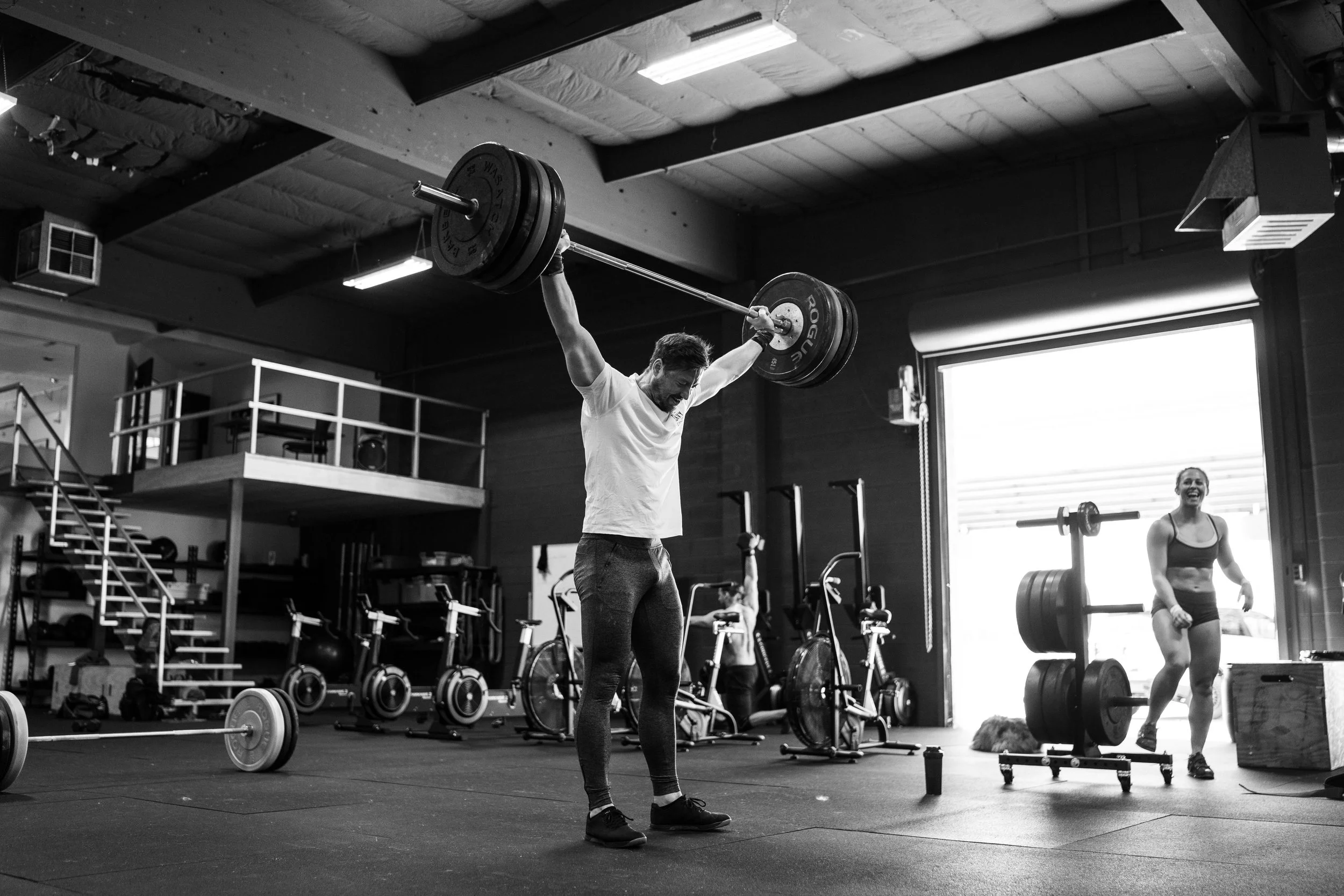
I know you all see it too. You scroll your preferred platform and within one to three swipes you'll stop as some athlete heaves an unimaginable weight overhead, or completes an impossible looking physical feat. The acts that some people are capable of are jaw dropping. Just the other day a friend sent me a video of an average looking person front squatting 405 for 8 reps and then proceeding to run a 1:15/400m. This was one of multiple intervals of him interpreting what is known as Litvinov Conversion, a workout named after the famous Olympic hammer thrower who, by legend, never actually completed the workout.
What we see, and compare to our own ability, might have us thinking that we are not lifting heavy enough, often enough, or that something is wrong with us because never in a million years would we be capable of such acts. But underneath it all lies an extreme illusion: that acts of strength are the same as training for strength.
What most often happens is that we copy the expression of others without developing the prerequisite attributes. In trying to demonstrate that we too are strong, we often break ourselves. The hope we had and the effort we gave plummets into despair. Disbelief in ourselves and what is possible makes many of us reject the idea of improvement altogether. If we can't be the best, what is the point of even trying? And this is exactly what keeps us weak.
I don't wish to dispel magic, but the industries of magic and strength have so much in common, especially their origins in the circus. In magic, the goal is the prestige, a moment in time when an audience believes the impossible has been achieved. It starts with "the pledge": the starting point must seem ordinary. Then "the turn," where the magician turns your perception to something extraordinary, like making a bird disappear. Finally, the prestige, where disbelief can be suspended because he allows the bird to reappear.
But the prestige can only happen with refined practice and skill development. Countless errors and tiny adjustments, in other words: training. Here is what displays of strength and magic have in common, a direction of attention on the act, and not in how the act is achieved.
Strength as an expression of lifting extreme weights is an act to impress others. A rehearsed display. It is tricking ourselves and any audience into thinking that we are not bound by the same physical limitations as others. The problem is that we have been convinced by entertainers that these tricks are shorthand for becoming "indestructible," which we all not so secretly desire to be. It is no different than the prestige, the moment an audience is suspended in the belief that the forces of the universe bend to the will of someone wearing a top hat.
Strength expression in sport has followed a similar path. Except that it has confused the trick and the rehearsal for the ability as a general capacity. Life is not a stage, and the prestige of lifting enormous weights under precise circumstances means that the trick is more often than not played on the lifter.
So we are not confused, I am not condemning lifting heavy objects nor am I denying the requirement of using heavy weights to develop strength. I am saying that thinking it will protect you against injury, or allow you to avoid the hard work of observing and attending to your weaknesses, is an illusion.
Strength is such a misunderstood concept in our modern times. But perhaps this simple fact will help: everything in the universe breaks. Nothing is indestructible. Many people think that strength training is about making yourself unbreakable, but it isn't. It's about observing where you think you'll break and doing the work to reinforce where you are vulnerable. Strength, or "maximum strength," is a perceived boundary, a point before you break. Hence the term "maximum." To train strength is to approach these boundaries, and in doing so we expand the boundary. We normalize the sensations and hesitations. We learn through exposure, bit by bit, that we can tolerate more. It is hard to really know that boundary without stepping over it from time to time, and crossing it proves the opposite of what we're seeking: that we all break eventually.
Strength training that helps protect you against physical catastrophe is about addressing the weakest parts of your physiology. If you have ever avoided lifting in a certain range because you can't "load" it properly, or given up on specific exercises and avoided them outright because they "hurt," you are, knowingly or not, avoiding the big fucking arrow pointing to a deficiency that needs to be addressed. That, my friend, is weakness calling you to fix it, and instead most people move on so they can keep pulling a bird out of their hat.
An exercise is not something to be performed, it is something you use to be informed about the function of your body and where it needs attention.
Strength is the ability to hold. Not just your spine in a deadlift or a front squat but in every angle you can imagine. Load is relative to the function of the tissue and joint you need in life and throughout your day, not just the pattern of an exercise you can load maximally. I felt this recently, down on one knee, reaching with a wrench through a wheel well of my car to loosen a bolt that was almost out of reach. I was stretched out and hunched over, trying my hardest to break it loose rather than going to get a better tool. I laughed, because it was a max effort from an angle most people would call "terrible form." But it wasn't unfamiliar to me. Since my concept of strength has changed from a display for others to my development, I allow myself to explore weak positions and address them. A flexed spine and hip, and internally rotated shoulder are not new or under developed, but no one would stop their scroll to see me not get hurt in that position.
The prestige of lifting heavy weights for sport or display limits the range and hides the fulcrum. A trick of physics that we call "technique." Impressive, sure, but so is sawing an assistant in half and then putting her back together. The difference is no one is trying to convince you to saw your wife in half to prove you are worthy of respect.
Strength is NOT general. Specificity is the first law of adaptation, and the industry knows it. It programs the specific: squat, bench, deadlift. Then it sells the result as general, because a general recommendation scales and your specific fix doesn't. That's the real magic trick. So we package some exercises and measure them. When you get better at them, we can validate our recommendation and compare you to others (only in those patterns, however).
The deadlift is argued as the king of strength exercises. No doubt it is a great lift, but this whole illusion falls apart when you read the comments under someone pulling an 800lb+ sumo deadlift. That isn't an argument you are watching, it's a peek behind the curtain. Someone will scream from their keyboard "doeSN'T CoUNT" as if 800lbs isn't 800lbs. What they really want to scream is "LeT ME ComParE!!"
I appreciate every expression of strength I get to witness. I understand what goes into them. Not just how much time and effort but how much sacrifice. To be that strong in that specific way means that they have to give up on attending to so much weakness just to look that strong. That isn't a passive dig, it is acknowledging the cost of a performance, the cost of the prestige.
No matter what I say here some will get angry, like I just revealed how a card trick works. But others will get curious, as they didn't know strength was specific and they never thought of strength training as addressing their weakness. So here is how:
Go back to those exercises you avoid. Try to pinpoint the orientation of the discomfort or pain. Spend 5 min, unloaded, trying to create an isometric contraction in the range you found uncomfortable. Move the joint around and try different angles and orientations. Increase the contraction gradually and pay close attention to the sensation. What you might find is that by simply paying attention to it, much of the pain dissipates or goes away completely. Even if it doesn't, this is how we get the weakest parts of our physiology stronger, by trying to understand them.
Being strong is not about lifting the heaviest weight, that's for the audience. It's about knowing where you'll break and doing the work to not let it happen.
